Frequently Asked Questions About Canadian Immigration
Find answers to the most common questions about immigrating to Canada in 2025-2028
What are the new permanent resident targets for Canada in 2025–2028?
Canada plans to admit approximately 380,000 new permanent residents annually from 2026 to 2028. The focus is on balanced economic immigration growth, with about 240,000 admissions through Express Entry and Provincial Nominee Programs each year.
Is Express Entry still the fastest route to Canadian PR?
Yes, Express Entry remains the quickest pathway for skilled workers, with most applications processed within five to six months as of 2025. Processing times may vary depending on application completeness and program category.
What is the Comprehensive Ranking System (CRS) score?
The Comprehensive Ranking System scores Express Entry candidates based on age, education, language proficiency, work experience, and other factors. In 2025, CRS scores remain critical for receiving invitations to apply for permanent residence.
Do I need an upfront medical exam for Express Entry?
Yes, as of August 21, 2025, Express Entry applicants must complete and submit their immigration medical exam before filing their application to reduce processing delays.
What is a Provincial Nominee Program (PNP)?
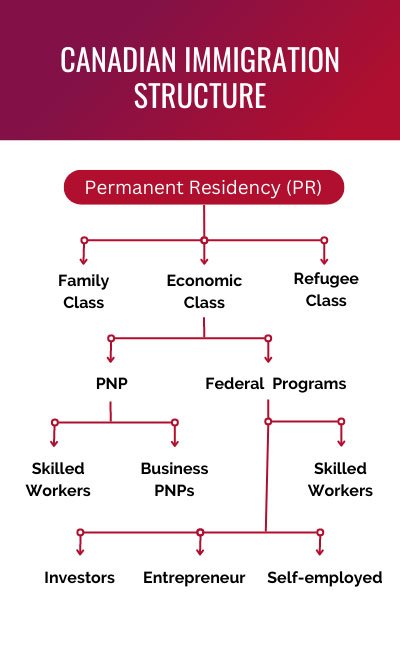
Provincial Nominee Programs allow Canadian provinces and territories to nominate immigrants based on regional labor market needs. An enhanced PNP nomination adds 600 CRS points to your Express Entry profile, greatly increasing your chances of receiving an invitation to apply.
Has Canada reduced temporary resident admissions?
Yes, starting in 2026, Canada significantly decreased temporary resident admissions to approximately 385,000 annually. This includes a cap of about 155,000 international student permits per year, down about 43% from 2025 levels.
Is there a cap on international students?
Yes, only approximately 155,000 study permits will be issued annually from 2026 onward as part of Canada’s strategy to stabilize population growth and ease pressure on housing and services.
Can I include my family when applying for PR?
Yes, you can include your spouse, common-law partner, and dependent children in your permanent residence application. They will gain permanent resident status together with you, along with accompanying work and study rights.
Can citizens abroad sponsor their spouse?
Yes, Canadian citizens living abroad can sponsor their spouse or common-law partner, provided they demonstrate intent to reside in Canada when their spouse’s permanent residence is approved.
How does Canada process family reunification?
Spouses, dependent children, parents, and grandparents can be sponsored under family reunification programs. Annual quotas are established to ensure sustainable processing and manage application volumes.
Does Canada still allow Super Visa for parents and grandparents?
Yes, the Super Visa program remains available for parents and grandparents, though it now has stricter quotas, eligibility requirements, and medical insurance requirements.
How do I prove language proficiency?
You must submit official results from recognized tests such as IELTS or CELPIP for English, or TEF for French. Results must meet the minimum Canadian Language Benchmark (CLB) levels specific to your immigration program.
What documents are needed for a PR application?
Typically required documents include: identity documents (passport), language test results, Educational Credential Assessment (ECA), proof of work experience, proof of funds, police clearance certificates, and medical exam results.
Are digital documents and e-signatures accepted?
Yes, digital submissions and e-signatures are accepted for many forms and documents. However, Immigration, Refugees and Citizenship Canada (IRCC) may request original documents later for verification purposes.
What is the minimum residency for Canadian citizenship?
You must reside in Canada for at least three years (1,095 days) within the five years immediately before applying for citizenship. You must also be a permanent resident for at least two of those years.
What are the main economic immigration options?
Key pathways include Express Entry (Federal Skilled Worker, Canadian Experience Class, Federal Skilled Trades), Provincial Nominee Programs, Atlantic Immigration Program, and Quebec-specific immigration programs.
Are there immigration options for entrepreneurs?
Yes, options include the federal Start-Up Visa program and various provincial entrepreneur streams that focus on business investment, economic impact, and job creation.
Are there pathways for specific sectors in 2025?
Yes, Immigration Canada frequently conducts targeted draws focusing on high-demand sectors such as healthcare, skilled trades, and construction to address specific labor market needs.
Can I apply to multiple immigration streams?
Yes, you may apply to multiple programs or submit applications to different provinces. However, you can only hold one active permanent residence application at a time.
How long does the PR process take?
Express Entry applications typically take about six months. Other immigration streams such as base Provincial Nominee Programs or Quebec programs may take longer, sometimes up to two years depending on the specific stream.
Are interviews required for PR?
Some applicants may be required to attend virtual or in-person interviews for verification purposes. Not all applications require interviews, and they are typically requested on a case-by-case basis.
Can I travel during PR processing?
Yes, you are permitted to travel during PR processing as long as you maintain valid immigration status and inform IRCC of any changes to your address or contact information.
Can temporary visa holders apply for PR?
Yes, international students and temporary workers in Canada often transition to permanent residence pathways. In fact, the government gives priority to those already residing and working in the country.
What if my permit expires while PR is being processed?
You can apply for a Bridging Open Work Permit (BOWP) to maintain legal status in Canada while awaiting your permanent residence decision.
Can work permit holders change employers?
Employer-specific work permits require IRCC approval to change employers. However, open work permits provide more flexibility and allow you to change employers without obtaining prior approval.
What are the financial requirements for immigration in 2025?
Proof of funds requirements have increased for economic immigration applicants. The exact amount varies based on family size. Check the IRCC website for current threshold amounts as they are updated regularly.
What are common reasons for refusal?
Common grounds for PR application refusal include: missing or incomplete documents, misrepresentation of facts, insufficient proof of funds, low language test scores, and failure to meet program eligibility criteria.
What if my PR application is refused?
Depending on the refusal reason, you may: file an appeal, reapply with improved documentation, or request a judicial review. It’s advisable to understand the specific grounds for refusal before proceeding.
Do I need an immigration lawyer?
Hiring an immigration lawyer or Regulated Canadian Immigration Consultant (RCIC) is not mandatory. However, legal assistance can be beneficial in complex cases or if you have concerns about inadmissibility or application complications.
How does Canada handle immigration fraud?
Canada has strengthened document verification and application review processes to combat fraud. Immigration authorities conduct thorough checks and use advanced systems to detect fraudulent applications.
Will misrepresentation affect future applications?
Yes, misrepresentation is taken very seriously and can result in bans from entering Canada for up to five years. This applies whether the misrepresentation was intentional or unintentional.
Are there new rules for refugees and humanitarian cases?
Immigration policies for refugees and humanitarian cases are frequently updated in response to global events and humanitarian needs. Canada has implemented special programs for vulnerable groups including Ukrainians and Palestinians.
Are there special measures for vulnerable groups?
Yes, Canada has dedicated immigration programs and pathways providing support and streamlined processing for certain vulnerable populations, including refugees and protected persons.
Will there be new pilot programs or category-based draws?
Yes, IRCC regularly launches new pilot programs and category-based Express Entry draws focusing on in-demand occupations such as healthcare workers, STEM professionals, and tradespeople.
What settlement support is available?
New permanent residents have access to free settlement services including language training (LINC programs), employment counseling, job search assistance, community orientation, and credential recognition support.
Do new rules affect visa-exempt travelers?
Yes, starting in 2025, visa-exempt travelers face more detailed entry checks and questioning at Canadian borders. Border officers conduct enhanced screening to ensure compliance with entry requirements.